
Summer AC Crisis: Prevent Drainage Leaks, Mold, and High DEWA Bills

Summer in the UAE can turn a small AC issue into a full household crisis. One clogged drain line becomes a ceiling stain. One dirty filter makes a room feel humid even when the unit runs all day. One poorly maintained system can push DEWA bills much higher than expected.
Air conditioning works hardest when temperatures rise, humidity climbs, and windows stay shut for long stretches. That is also when hidden problems show up. Drainage leaks, mould growth, weak cooling, strange smells, noisy indoor units, and high electricity use often come from the same root cause: the AC system is not moving air, removing moisture, or draining water properly.
This guide explains why these problems happen, how to prevent them, and what simple maintenance habits can protect both indoor comfort and monthly bills.
Why summer pushes AC systems to the limit
An AC unit does more than cool the air. It also removes moisture. Warm indoor air passes over a cold evaporator coil, water condenses on the coil, and that water should flow safely through a drain pan and drain line.
During peak summer, this cycle runs for many hours each day. More runtime means more condensation, more dust trapped in filters, and more pressure on electrical parts. If one part of the system is dirty, blocked, or poorly adjusted, the effects quickly spread.
A dirty filter can reduce airflow. Low airflow can make the coil too cold. A very cold coil may freeze, then melt later and cause water overflow. A blocked drain line can leave water sitting inside the indoor unit. Standing water can support mould growth and produce musty smells.
This is why the summer AC crisis, drainage leaks and mold growth, problems and maintain your AC unit are all closely connected. They are rarely separate issues. They often come from poor airflow, poor drainage, or skipped maintenance.
Common warning signs include:
Water dripping from the indoor unit
Damp patches on walls or ceilings
A musty smell when the AC starts
Weak airflow from vents
Cooling that feels uneven from room to room
AC running for a long time without reaching the set temperature
Sudden increases in electricity consumption
Unusual buzzing, clicking, or rattling sounds
Small signs matter. AC systems usually give warnings before they fail completely.
Drainage leaks are often small problems with expensive results
Drainage leaks are among the most common summer AC complaints. They can look minor at first, especially if the leak is only a few drops. But water near ceilings, walls, gypsum boards, electrical points, or flooring can cause costly damage if ignored.
Why AC drainage leaks happen
Most leaks begin with one of these issues.
Clogged drain line
Dust, algae, and slime can build up inside the condensate drain line. When water cannot move out, it backs up into the drain pan and may overflow.
Dirty evaporator coil
A dirty coil blocks heat transfer and can disturb how condensation forms and drains. Water may drip in places it should not.
Cracked or rusted drain pan
Older units may have damaged drain pans. Even a small crack can release water into the ceiling void or wall space.
Poor installation slope
Drain lines need the right fall so water flows away by gravity. If the slope is wrong, water can sit in the pipe and collect debris.
Frozen coil melting
If the coil freezes due to low airflow, low refrigerant, or another fault, it can release a sudden flow of water as it melts. The drain pan may not handle the extra volume.

How to reduce the risk of leaks
Good drainage maintenance is simple, but it needs to happen before peak heat arrives.
Clean or replace filters regularly, especially during heavy use.
Keep return air grilles clear of curtains, storage boxes, and furniture.
Ask a qualified technician to flush the drain line during seasonal servicing.
Make sure the drain pan is checked for cracks, rust, and standing water.
Do not ignore ice on the indoor unit or refrigerant pipe.
Watch for stains near ceilings, access panels, or AC vents.
If water is already dripping, switch the unit off and avoid running it until the cause is found. Running a leaking AC may worsen damage and increase the risk of electrical faults.
Mould growth starts with moisture and poor airflow
Mould thrives where moisture stays trapped. In AC systems, that usually means wet drain pans, dirty coils, clogged filters, damp ducts, or areas where condensation forms and does not dry.
A musty smell is often the first clue. The smell may be strongest when the AC first turns on, then fade as air keeps moving. That does not mean the problem has disappeared. It may only mean airflow has spread the odour through the room.
Where mould can grow in an AC system
Mould can appear in several areas:
On dirty evaporator coils
Inside clogged drain pans
Around air vents with condensation
On damp filters left too long
Inside ductwork where humidity is high
Near water-damaged ceiling or wall materials
Not every dark mark is mould, and not every smell comes from mould. Dust, stagnant water, and dirty insulation can also produce unpleasant odours. Still, moisture should never be ignored.
Why summer makes mould worse
Summer creates the right conditions. The AC removes large amounts of moisture from indoor air, which means the drainage system stays wet for longer. If the unit cycles poorly, if airflow is weak, or if the thermostat is set too low, condensation may increase.
Closed rooms can make matters worse. Bedrooms, storage rooms, and guest rooms that get little fresh air may feel damp, especially if vents are blocked or the AC is switched off for long periods.
Practical ways to prevent mould
The best mould prevention plan is moisture control.
Keep filters clean so air moves freely.
Service coils before they become heavily coated with dust.
Repair water leaks as soon as they appear.
Do not block supply or return vents.
Keep indoor humidity under control with correct AC sizing and operation.
Let air circulate in rarely used rooms.
Avoid setting the thermostat extremely low for long periods.
For visible growth inside the unit or ducts, basic surface cleaning is not enough. A trained AC technician should inspect the coil, drain pan, blower wheel, and duct condition. If building materials are wet or damaged, they may need separate cleaning or repair.

High DEWA bills usually signal wasted cooling
A higher summer bill is expected because AC use rises. But a sharp or unusual increase can point to wasted energy. The AC may be working longer than needed because the system is dirty, the thermostat setting is too low, cool air is escaping, or heat is entering the home faster than the system can remove it.
This is where homeowners and tenants need to look at DEWA bills and suggest energy-saving strategies, understand the importance of AC maintenance during the summer months, and connect energy use with AC performance.
Why a neglected AC uses more electricity
When filters, coils, and fans get dirty, the system has to work harder to move air and remove heat. That can extend runtime. Longer runtime means higher electricity use.
Low refrigerant, poor insulation, leaking ducts, and weak capacitors can also reduce cooling performance. The AC may stay on for long periods but still fail to cool the room properly.
A unit that cools poorly often leads people to lower the thermostat. That may feel logical, but it can make the unit run even longer without solving the real issue.
Energy-saving habits that actually help
Choose habits that reduce heat gain and improve AC efficiency.
Problem | What helps | Why it works |
Rooms heat up quickly | Close curtains during peak sunlight | Less direct heat enters the room |
AC runs all day | Set a practical thermostat temperature | The unit cycles more efficiently |
Weak cooling | Clean filters and service coils | Better airflow improves heat removal |
Uneven room temperatures | Keep interior doors and vents balanced | Air circulates more predictably |
Cooling escapes | Seal gaps around doors and windows | Less cooled air is wasted |
Outdoor unit overheats | Keep the condenser area clear | Hot air can discharge properly |
A practical thermostat setting is a balance between comfort and cost. Setting the AC slightly warmer can reduce energy use, especially when combined with fans, curtains, and clean filters. Ceiling fans do not lower room temperature, but they help people feel cooler, which can make a higher thermostat setting comfortable.
Check the outdoor unit too
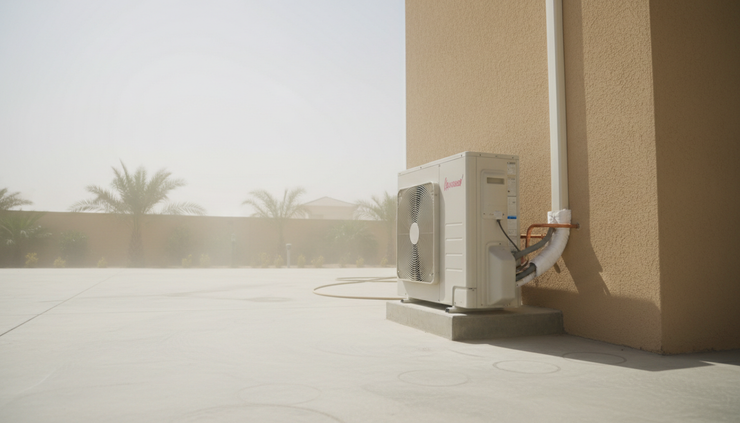
The outdoor condenser needs space to release heat. If it is surrounded by stored items, leaves, dust, or poor ventilation, the system may struggle. Keep the area around the condenser clear and schedule cleaning when dirt builds up on the coil.
Never spray or dismantle electrical parts unless trained to do so. Outdoor units contain electrical components and refrigerant lines that need proper handling.
A simple summer AC maintenance routine
AC maintenance should not be a once-a-year emergency call after water starts dripping. A light routine throughout summer can prevent many failures.
Every two to four weeks
Check the filter. In dusty conditions or homes with pets, filters may need attention more often. A clean filter protects airflow, reduces strain on the fan, and helps keep the coil cleaner.
Look for visible warning signs:
Water marks near the indoor unit
Unusual noise during startup
Weak airflow
Ice on pipes or coils
Musty smells
Rooms taking longer to cool
Every month during heavy use
Inspect vents and grilles. Make sure furniture, rugs, curtains, or storage items are not blocking airflow. Check that the outdoor unit has space around it.
Review energy use patterns. If DEWA consumption rises sharply without a clear reason, compare AC habits, thermostat settings, and maintenance status. A dirty or faulty AC can quietly waste power for weeks.
Before and during peak summer
Book a professional service before the hottest months or as soon as performance changes. A proper service should include more than a quick filter rinse.
Ask for these checks:
Filter, coil, and blower condition
Drain pan and drain line flow
Refrigerant pressure, where relevant
Electrical connections and capacitors
Thermostat operation
Outdoor condenser coil condition
Signs of duct leakage or condensation
A good technician should explain what they found in plain language. If a part needs repair, ask what caused the failure and how to prevent it from returning.

When to call a technician immediately
Some issues should not wait for the next service visit. Call a qualified technician if the AC is leaking heavily, tripping the breaker, making electrical smells, freezing repeatedly, or cooling very poorly despite clean filters.
Also get help if mould smell returns soon after cleaning. That may mean moisture remains inside the system, the drain is not flowing, or contamination has spread beyond the visible area.
Do not keep resetting breakers or running a unit that behaves strangely. AC systems combine water, electricity, moving parts, and refrigerant. Quick action can prevent a small repair from becoming a major replacement.
The takeaway for a cooler, cleaner summer
A reliable AC system is not just about comfort during UAE summer. It protects walls, ceilings, indoor air quality, and monthly energy costs. Drainage leaks and mould usually start with moisture that is not draining or drying properly. High DEWA bills often follow when the AC works harder than it should.
The best approach is simple: keep filters clean, protect airflow, clear drainage, shade rooms from heat, use sensible thermostat settings, and schedule professional servicing before small warning signs grow. A well-maintained AC cools faster, smells cleaner, leaks less, and uses energy more wisely when summer is at its toughest.


Comments